Tracking Tips Thursday: Call Tracking in Google Ads for Lead Generation
If you run a small business—especially one focused on lead generation or services—and PPC is part of your marketing strategy, call tracking could help you get a clearer picture of your advertising performance. By tracking phone calls in Google Ads, you can understand which campaigns, ads, landing pages, and keywords are actually driving potential customers.
While many small businesses rely on tools like CallRail or CallTrackingMetrics to track phone call conversions from their website, Google Ads also offers a built-in call tracking feature for users who click on your ads.
How Call Conversion Tracking Works in Google Ads
Here’s how it works: when someone clicks your ad and then calls the number on your website, that phone call can be recorded as a conversion in Google Ads—complete with details like campaign, ad group, and keyword attribution. For SMBs that depend on phone calls, such as doctors, plumbers, car dealerships, and other service-based businesses, this level of visibility can be incredibly valuable for optimizing PPC performance, understanding ad spend, and allocating budget.
If you’re looking for insights across multiple channels or want more advanced call analytics, a dedicated call tracking platform may still be the right fit. However, even if you already use another call tracking solution, setting up tracking in Google Ads can still provide an additional, helpful source of data. For businesses that primarily use Google Ads to drive traffic, its built-in call tracking is a reliable, cost-effective way to better understand the impact of your paid search efforts.
How to set up Call Tracking in Google Ads
Setting up call tracking involves creating a phone call conversion action in Google Ads and using Google Tag Manager to track when someone calls after visiting your website. The steps below walk you through the entire setup, including the Google Ads conversion settings and the tags you’ll need in Google Tag Manager. Before you begin, you will need to make sure the g-tag and the conversion linker tag are already firing on all pages of your website.
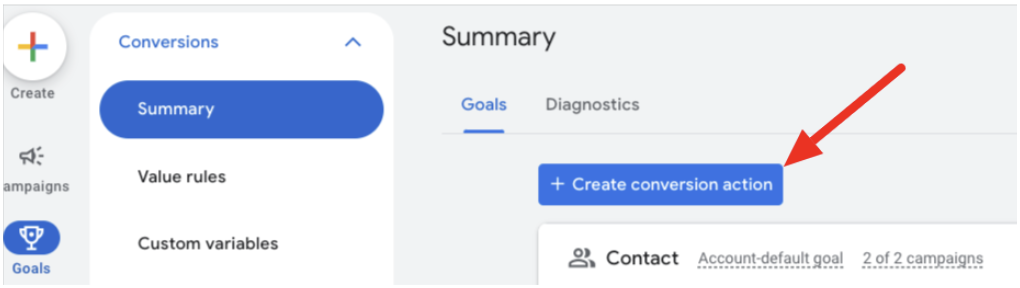
Step 1: Navigate inside of Google ads to the goals summary page and click “Create Conversion Action”
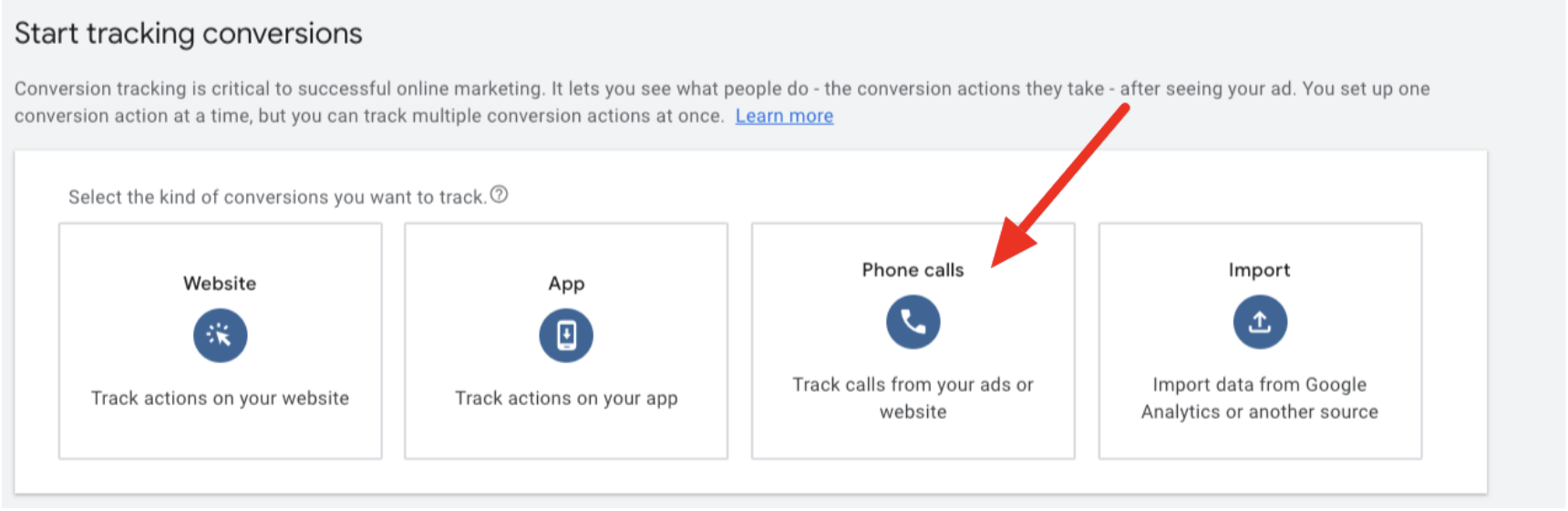
Step 2: (Depending on your Google Ads account this piece may look different) Select “Phone Calls”

Step 3: Select “Calls to a phone number on your website”
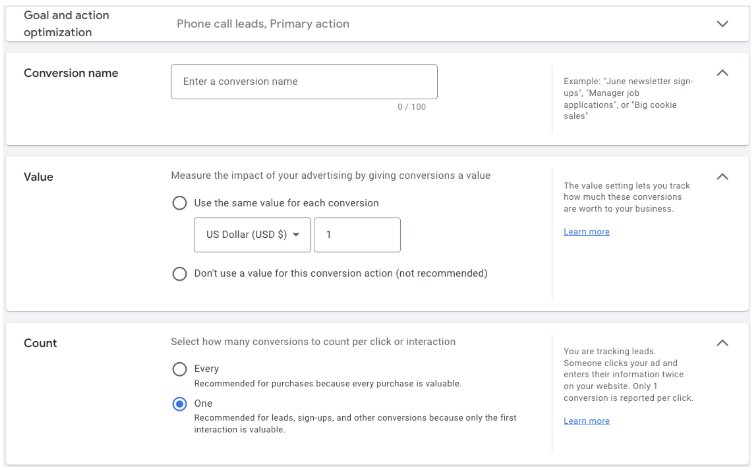
Step 4: Fill out the form with all the necessary information. (For phone calls I usually select one for “how many conversionions to count per click or interaction” because sometimes people will call multiple times.)
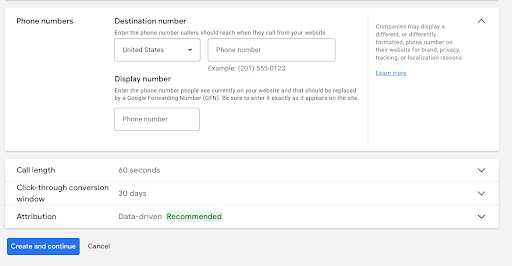
Make sure you copy the number off your website EXACTLY as it appears.
Step 5: Select “Use Google Tag Manager”. This will take you to a confirmation page with a “Conversion ID” and “Conversion Label”. Leave this page up and open Google Tag Manager in another tab or window


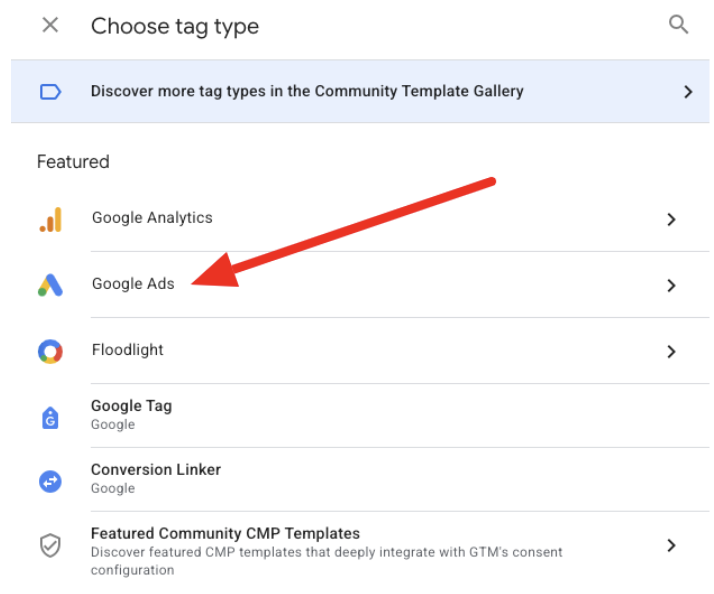
Step 6: Head to Google tag manager and create a new tag. Select “Google Ads” & then select “Google Ads calls from website”
Step 7: Fill in the tag information (again put in the phone number from the website EXACTLY as it appears on the site. Then copy the Conversion ID and Conversion Label that you left open in Google ads and paste them into the tag configuration window
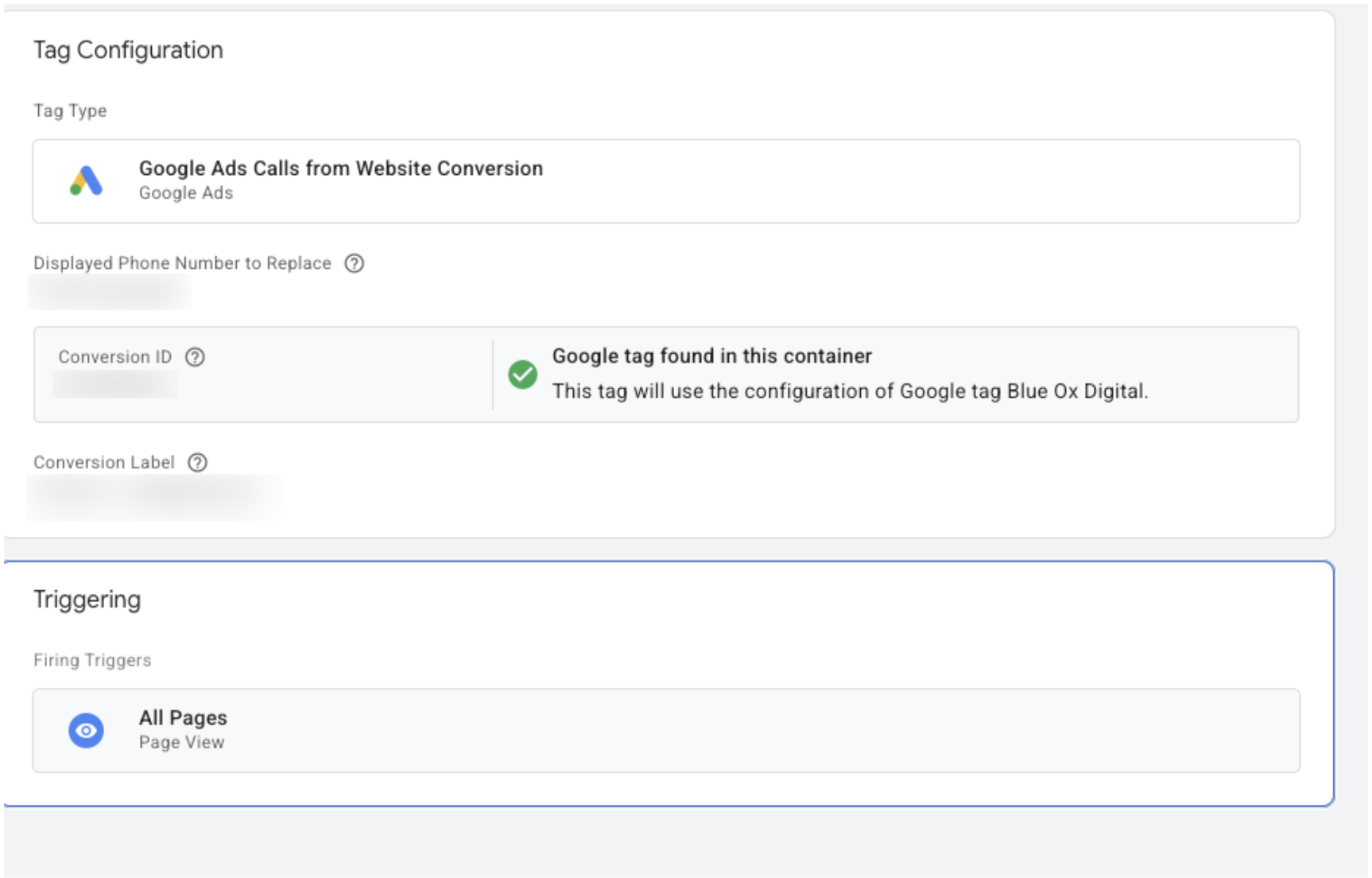
Step 8: Set up a page view trigger to fire on all pages
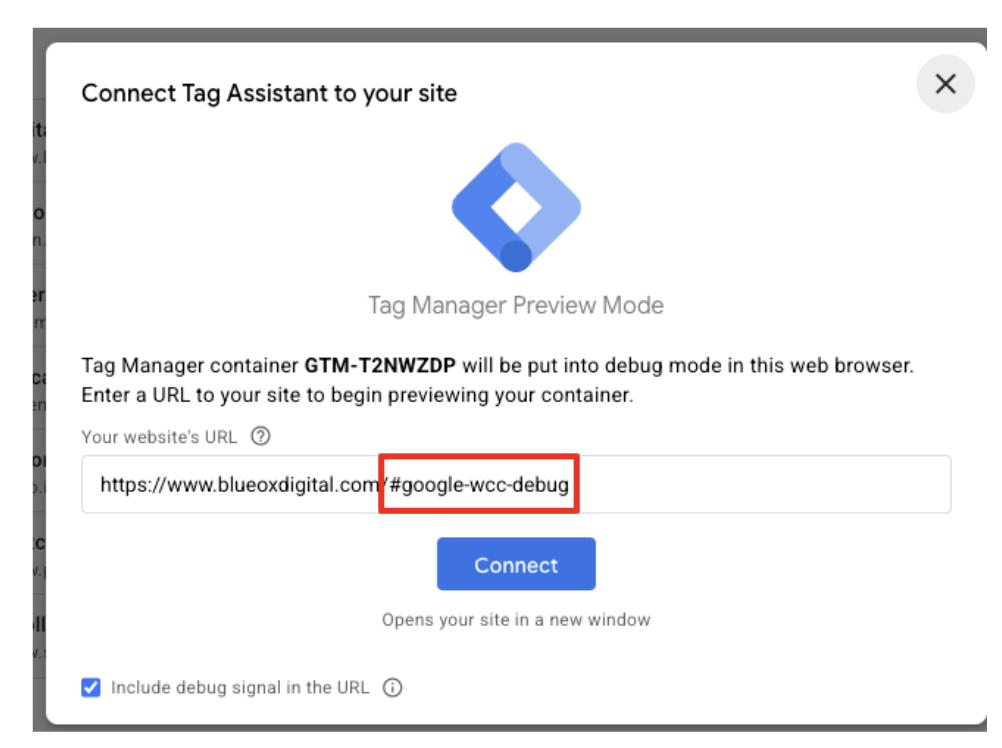
Step 9: Save your trigger and tag and open up the preview (we are going to make sure the number swap is working). In the preview box enter your website URL followed by “#Google-Wcc-Debug”
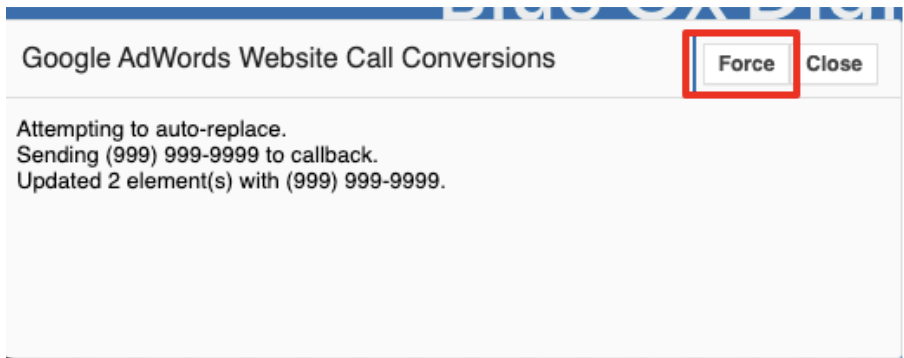
Step 10: As your website loads you should see a small box on the bottom left that says “Google AdWords” Website Call Conversions. Hit the “Force” button and you should see the following message if everything was set up correctly.
*Make sure to save the conversion in Google Ads and Publish your GTM container.
Once your Google Ads call tracking is set up, as long as the call length is longer than the minimum duration you selected, you’ll start seeing when users click an ad and call the number on your site. This gives you a new layer of insight into how your campaigns are really performing.
For example, a campaign or keyword that seemed underwhelming on the surface might actually be driving a large share of your phone leads. With that information, you might decide to adjust your bid strategy to allocate more budget based on these results. It’s actionable data that helps you make smarter decisions.
Turn More PPC Data Into Better Lead Generation
Setting up call tracking through Google Ads can be a great first step toward a more comprehensive tracking solution. It can also complement platforms like CallRail or CallTrackingMetrics which provide additional insights across your marketing efforts, including Facebook, Instagram, organic traffic, even offline channels like billboards or print materials.
For service-based businesses, understanding where your phone leads come gives you valuable insight into what’s working and where to invest next. At Blue Ox Digital, we help businesses use PPC, conversion tracking, and performance data to make smarter marketing decisions and generate more qualified leads.
Whether you need help setting up conversion tracking or want a more strategic approach to managing your paid media, our team can help you get more from your paid search investment. Request a free PPC audit to get an outside look at your account performance.
